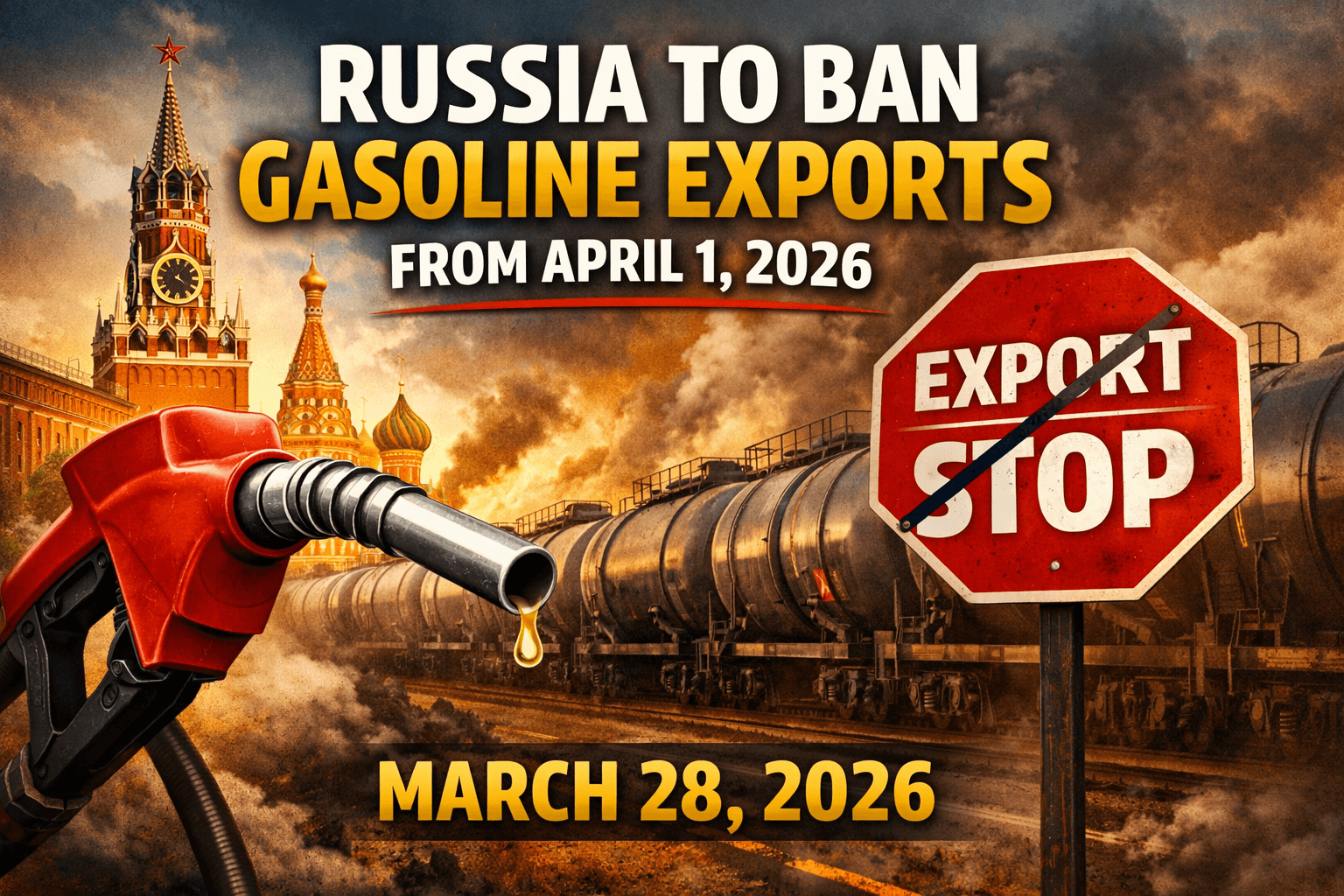
Russia Pulls the Plug: Gasoline Export Ban Kicks In
April 1
If you’ve
been watching the energy markets this week, the news out of Moscow isn't
exactly a shock, but it is a massive deal. Starting April 1, 2026, Russia is
officially halting all gasoline exports. This isn’t just a suggestion or a
temporary "slowdown"—it is a full-blown ban aimed at protecting their
own backyard.
The
Kremlin is making it clear: domestic supply comes first, and the rest of the
world will just have to wait. By locking down their refined fuel, they are
trying to prevent a price explosion at Russian pumps. For a country that
effectively runs on energy, keeping the local population happy is way more
important right now than chasing export dollars.
Why the sudden "No" to exports?
The
timing isn't accidental. April is a high-stakes month in Russia. We are looking
at a "perfect storm" of demand and supply issues that forced the
government's hand.
First
off, you have the Spring Sowing Season. In the agricultural heartlands,
farmers are firing up thousands of tractors and heavy machines. If there’s a
shortage of fuel during planting, the food supply chain breaks down. The
government simply can't risk a fuel deficit while the country's food security
is on the line.
Then,
there is the Refinery Headache. Right now, several major Russian
refineries are scheduled for seasonal maintenance. When these plants go offline
for repairs, the total output of gasoline naturally drops. Instead of letting
that lower production cause a shortage or drive prices sky-high for Russian
drivers, the state is simply cutting off the "outflow" to
international buyers to keep the internal tank full.
The Global Ripple Effect
Let’s be
real—this is going to hurt the global market. Russia is a heavy hitter when it
comes to refined petroleum products. When a supplier of this size suddenly
leaves the table, everyone else has to scramble.
Traders
are already anticipating a tighter market. We’ve seen this play out before:
supply drops, anxiety goes up, and prices at the pump in Europe and parts of
Asia start to creep northward. While this ban specifically targets gasoline
(and not necessarily diesel or crude oil yet), the psychological impact on the
market is already being felt. Analysts expect a fair bit of volatility over the
next few weeks as buyers look for alternative sources to fill the gap.
The
Reality Check: While
the ban is set to begin on April 1, there’s no official word on exactly when it
will end. Most insiders believe it will stay in place until the domestic stock
reaches a "safety zone," which could take anywhere from a few weeks
to several months.
What’s the big picture?
This move
highlights a growing trend of "energy nationalism." Russia is betting
that stability at home is worth the diplomatic and financial friction it causes
abroad. They are essentially sacrificing short-term export profits to ensure
that their own economy doesn't overheat from fuel inflation.
For
international energy firms, this is a wake-up call to diversify. Relying on
Russian refined products has always been a bit of a gamble, and this April 1st
cutoff is a stark reminder of how quickly the tap can be turned off.
Bottom
line: If
you’re a driver in Russia, you can breathe a sigh of relief for now. If you’re
a fuel importer anywhere else, your job just got a whole lot harder.